Keynotes
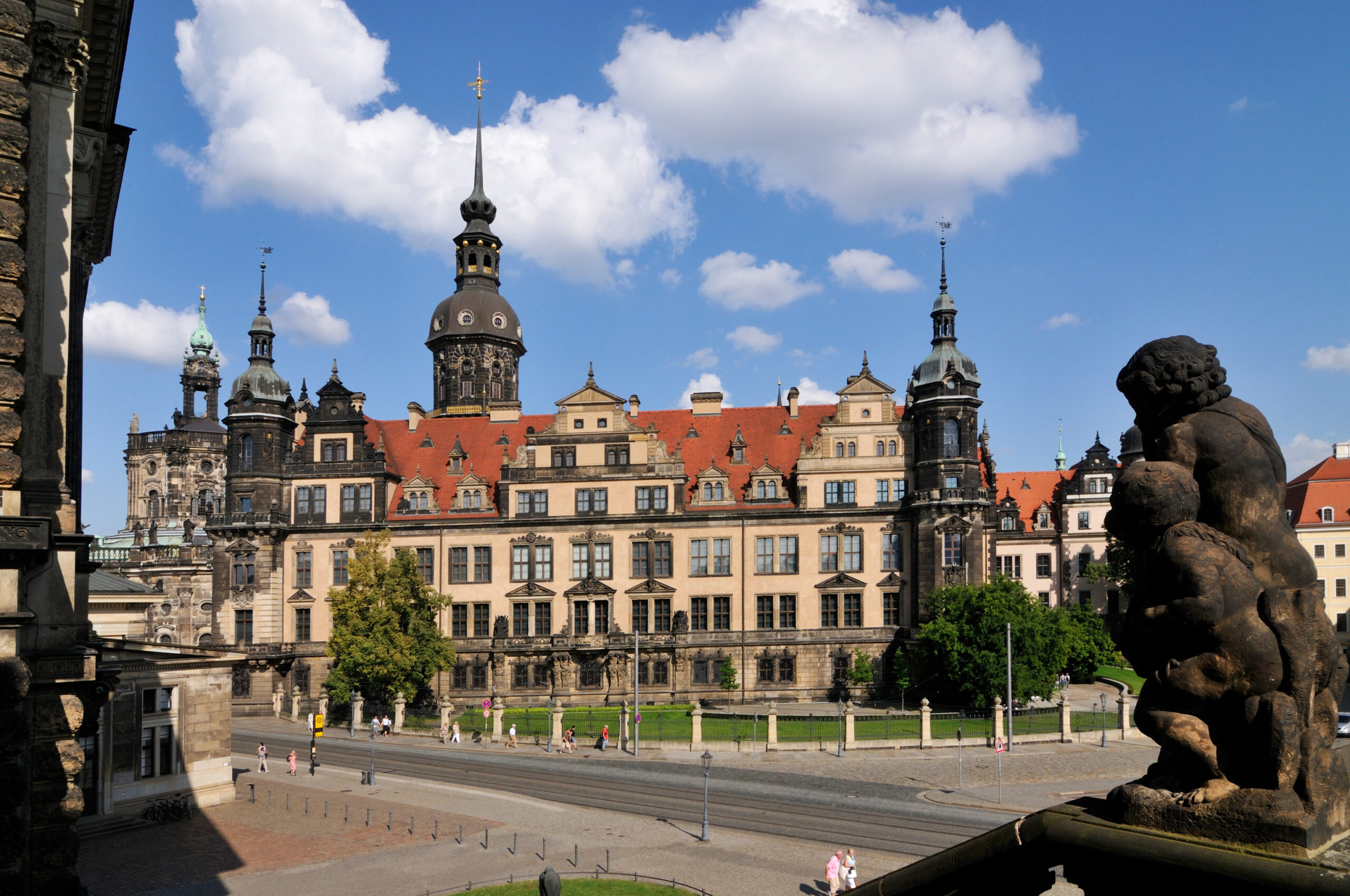
Photo: Frank Exß (DML-BY)




Keynotes
Joerg Widmer
Title: Wireless Sensing: From Localization to Coherent Imaging
Abstract
Next generation wireless communication systems are increasingly capable of providing accurate sensing in addition to connectivity. By reusing spectrum and infrastructure, these systems can provide capabilities traditionally associated with radar, including precise localization and motion tracking. This keynote discusses the evolution of wireless sensing from simple device localization to advanced imaging in distributed multi-static wireless systems. The talk will cover how time and frequency offsets can be handled for accurate sensing among unsynchronized devices, how sparse frequency bands can be combined to increase resolution, and how receivers can cooperate to form synthetic apertures for coherent imaging of dynamic scenes. We will emphasize experimental testbeds and real-world demonstrations, highlighting both practical challenges and opportunities in turning communication networks into pervasive sensing infrastructures.
Biography
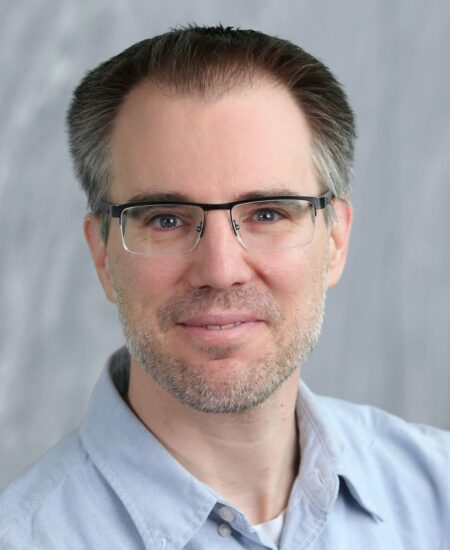
Joerg Widmer is Research Professor and Research Director of IMDEA Networks in Madrid, Spain, where he leads the Wireless Networking Research Group. Previously, he worked at DOCOMO Euro-Labs in Munich, Germany and EPFL, Switzerland, and has held visiting researcher positions at ICSI Berkeley (USA), University College London (UK), and TU Darmstadt (Germany). His research focuses on wireless networks, ranging from extremely high frequency millimeter-wave communication and wireless sensing to mobile network architectures. Joerg Widmer authored over 250 conference and journal papers, and holds 14 patents. He was awarded an ERC consolidator grant, the Friedrich Wilhelm Bessel Research Award of the Alexander von Humboldt Foundation, a Mercator Fellowship of the German Research Foundation, a Spanish Ramon y Cajal grant, as well as 16 best paper awards. He is an IEEE Fellow and Distinguished Member of the ACM.
Luca Mottola
Title: From Resource-constrained to Resource-unstable Intelligence
Abstract
For decades, we designed systems around scarcity: little memory, little energy, and little compute. We are increasingly facing a more fundamental challenge: resources are not merely scarce, but unstable: energy arrives unpredictably, storage operations may be imperfect, memory contents may decay, and eventually the physical substrate itself may disappear. This talk explores what it means to build intelligent devices under these conditions. I will describe our recent work showing how the limitations and imperfections of frontier embedded computing platforms can become opportunities for system design: neural networks can be shaped around the hardware that executes them; unnecessary computation can be predicted and skipped; controlled memory errors can be traded for energy and throughput; and even the configuration of energy storage can become part of the computation itself. Transient electronics, however, point to a more radical future: retention, endurance, and energy availability may evolve on timescales comparable to program execution, invalidating the conventional abstraction of a stable machine surrounded by constrained resources. Ultimately, this perspective challenges conventional notions of efficiency and correctness and motivates a shift from computing despite unstable resources to computing with them.
Biography
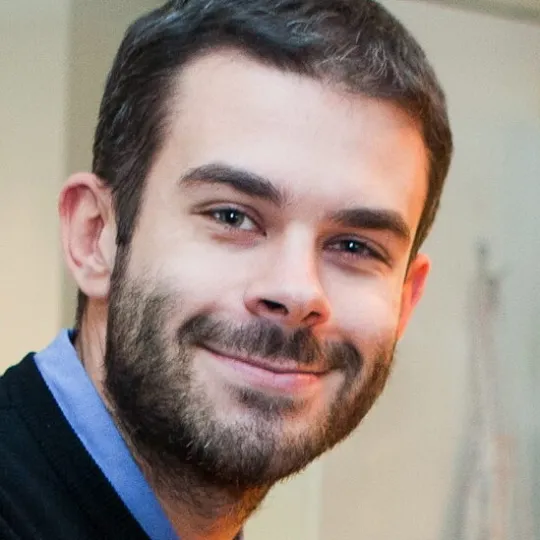
Luca Mottola is a Full Professor at Politecnico di Milano (Italy), a Senior Researcher at RI.SE Sweden, and a Visiting Faculty at Uppsala University (Sweden). At Politecnico di Milano, he leads the Networked Embedded Software Lab. The lab develops intelligent technologies at the frontier of the Internet of Things, including embedded AI, battery-less sensing, nanosatellites, and Internet-connected robotics. These technologies are used by a dozen companies to create new products and are currently running in hundreds of embedded devices worldwide. To date, he is the only European researcher to be granted multiple times with the ACM SigMobile Research Highlight. He received the ACM SENSYS Test of Time Award in 2022, is a Google Faculty Award winner, and received eight Best Paper Awards at flagship scientific events. He is the past General Chair for ACM/IEEE CPS-IoT Week 2022, past PC Chair for ACM MOBISYS, ACM SENSYS (youngest to date), ACM/IEEE IPSN (youngest to date), and ACM EWSN, as well as an associate editor of IEEE Transactions on Networking and ACM Transactions on Sensor Networks. He holds or held visiting positions at NXP Technologies, University of Southern California, University of Illinois at Chicago, TU Graz, and USI Lugano.
Honorary Dinner Speech
Adam Wolisz
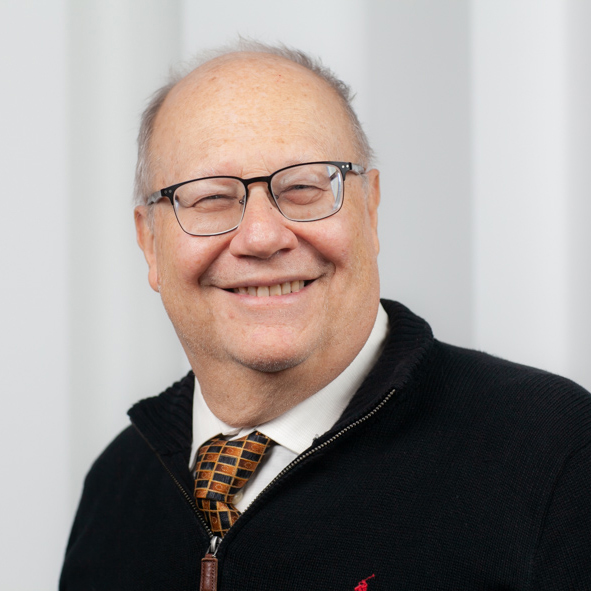
Prof. Dr.-Ing. Adam Wolisz is an Associated Researcher at the Einstein Center Digital Future (ECDF). He received the M.S., Ph.D., and Habilitation degrees from the Silesian University of Technology, Gliwice, Poland, in 1972, 1976, and 1983, respectively. After research work with the Institute of Complex Control Systems, Polish Academy of Sciences and GMD Fokus (Berlin) he was appointed Professor with Technische Universitaet Berlin, Berlin, Germany, leading the Telecommunication Networks Group (1993–2018) and acted as the Executive Director of the Institute for Telecommunication Systems (2001–2018). He was also an Adjunct Professor with EECS, University of California, Berkeley, Berkeley, CA, USA, (2005–2017) associated with Berkeley Wireless Research Center. Since retirement (2018) he has been active as a fellow with ECDF. His research interests include communication network architectures and protocols as well as protocol engineering.